Monday, June 3, 2019
Review Day 1
Today we reviewed the test we just took, i am feeling confident about this semesters test and quizzes. I think i will be able to get a good grade without many issues on the exam.

Thursday, May 30, 2019
Day before test
reformed=Reformation
Luther believed
1) Win salvation by faith in Gods gift of forgiveness
2) Church's teachings should be clearly based on the words of the bible
3) All people with faith are equal, don't need priests as interpret bible for them
~church called his ideas heretical ideas
~1520 Pope Leo X issues a decree to excommunicate him from the church unless he takes back his statements
~Luther before a crowd throws decree into a fire and he is excommunicated from church
~Holy emperor Charles V holds a trial and finds Luther guilty
~The is held in Prince Frendrick's castle where he makes the bible in German
~Changes name to "Junker Jorg"
~When he returns to Wittenburg after a year people find his ideas good and use them
~
Luther believed
1) Win salvation by faith in Gods gift of forgiveness
2) Church's teachings should be clearly based on the words of the bible
3) All people with faith are equal, don't need priests as interpret bible for them
~church called his ideas heretical ideas
~1520 Pope Leo X issues a decree to excommunicate him from the church unless he takes back his statements
~Luther before a crowd throws decree into a fire and he is excommunicated from church
~Holy emperor Charles V holds a trial and finds Luther guilty
~The is held in Prince Frendrick's castle where he makes the bible in German
~Changes name to "Junker Jorg"
~When he returns to Wittenburg after a year people find his ideas good and use them
~
Tuesday, May 28, 2019
Luther and the Reformation
Church Work
~SOCIALLY: Renaissance emphasis on the secular(worldly) and the individual challenged church authority
-printing press spread these ideas
~POLITICALLY: Rulers(especially Germans) began to challenge church's political power
~ECONOMICALLY: Northern Merchants resented paying church taxes to Rome
Church Problems
~corrupt leadership
~Popes spent money on personal pleasure
~Pope Alexander the 6th admitted to fathering 7 children
~Priests and Monks were poorly educated
~Some priests broke vows, got married, and had children
~Some priests drank heavy, gambled
Indulgences
~Selling indulgences (pardons) "Releases a sinner from preforming the penalty a priest imposed for sins"
~Johann Tetzel was a monk who sold indulgences to help rebuild St. Peters Cathedral
Martin Luther
~Born in Germany1483
~Studied trivium- grammer, logic, rhetoric- hates it
~Attends university of Erfurt
~After that inrolls in law school
At 21 thrown off his horse and was scared and vowed to become a priest
~then drops out of law school
~joins Augustinian monastery
~ordained priest
~teaches theology at university of Wittenburg
~two bachelors degrees
~doctor of theology
~MAD AT CHURCH
~called Tetzel a "pardon merchant"
made 95 objections to the way the church was doing business and nailed to the church door
~known as "95 Theses"
'
~SOCIALLY: Renaissance emphasis on the secular(worldly) and the individual challenged church authority
-printing press spread these ideas
~POLITICALLY: Rulers(especially Germans) began to challenge church's political power
~ECONOMICALLY: Northern Merchants resented paying church taxes to Rome
Church Problems
~corrupt leadership
~Popes spent money on personal pleasure
~Pope Alexander the 6th admitted to fathering 7 children
~Priests and Monks were poorly educated
~Some priests broke vows, got married, and had children
~Some priests drank heavy, gambled
Indulgences
~Selling indulgences (pardons) "Releases a sinner from preforming the penalty a priest imposed for sins"
~Johann Tetzel was a monk who sold indulgences to help rebuild St. Peters Cathedral
Martin Luther
~Born in Germany1483
~Studied trivium- grammer, logic, rhetoric- hates it
~Attends university of Erfurt
~After that inrolls in law school
At 21 thrown off his horse and was scared and vowed to become a priest
~then drops out of law school
~joins Augustinian monastery
~ordained priest
~teaches theology at university of Wittenburg
~two bachelors degrees
~doctor of theology
~MAD AT CHURCH
~called Tetzel a "pardon merchant"
made 95 objections to the way the church was doing business and nailed to the church door
~known as "95 Theses"
'
Friday, May 24, 2019
Section 3
1)
A)Indulgence- Belief to buy way into heaven
B)Reformation- formation of several protestant churches
C)Lutheran- What Luther and his followers were called
D)Protestant- Christians who belong to non catholic churches
E)Peace of Augsburg- a religious statement that decided the religion of the state
F) Annul- to set aside marriage
G)Anglican- church of England with Elizabeth as head
3) What political, economic, and social factors helped bring about the Reformation?
Queen Elizabeth restore Protestantism, monarchs challenged the church, people viewed Pope as a foreign ruler, merchants didn't want to pay taxes, and people wanted to divorce.
4) From what term did Protestantism ordinate?
During the a war in Germany they stayed loyal to the Pope but didn't attend Catholic event so they became known as Protestants.
A)Indulgence- Belief to buy way into heaven
B)Reformation- formation of several protestant churches
C)Lutheran- What Luther and his followers were called
D)Protestant- Christians who belong to non catholic churches
E)Peace of Augsburg- a religious statement that decided the religion of the state
F) Annul- to set aside marriage
G)Anglican- church of England with Elizabeth as head
3) What political, economic, and social factors helped bring about the Reformation?
Queen Elizabeth restore Protestantism, monarchs challenged the church, people viewed Pope as a foreign ruler, merchants didn't want to pay taxes, and people wanted to divorce.
4) From what term did Protestantism ordinate?
During the a war in Germany they stayed loyal to the Pope but didn't attend Catholic event so they became known as Protestants.
Thursday, May 23, 2019
Finishing the powerpoint
Today in Western Civilization with Mr. Schick's class we finished the powerpoint talking the printing press.
We talked about how the Chinese invented it and then Johannes Gutenburg revolutionized it in 1439 which was a very important invention for that time.
We talked about how the Chinese invented it and then Johannes Gutenburg revolutionized it in 1439 which was a very important invention for that time.
Tuesday, May 21, 2019
Day 2 Renaissance
Today in Western Civilization we learned more on the Renaissance.
Humanism
~Deep interest in what people have already achieved, as well as what they are capable of achieving in the future
~ resembles Greek word Arete
Classical writings were important to them worldly (Secular) values were essential-concerned with the here and now- christian values still important but separate from secular values
Renaissance women= someone who supported male artists
Renaissance man= Master of many fields of work
Sculptures made realistic figures, such as the Pieta
~carved from marble
~found in St. Peters Basilica in Vatican city
Perspective: Using shadowing and depth to create the illusion of three dimensions
Frescoes
~Where pigment merges with plaster, becoming part of the wall/ceiling
Literature
~wrote in the vernacular- native language
~Previously, most scholars writings was in Greek or Latin
~Wrote to express thoughts and feelings
~found in St. Peters Basilica in Vatican city
Perspective: Using shadowing and depth to create the illusion of three dimensions
Frescoes
~Where pigment merges with plaster, becoming part of the wall/ceiling
Literature
~wrote in the vernacular- native language
~Previously, most scholars writings was in Greek or Latin
~Wrote to express thoughts and feelings
Monday, May 20, 2019
Day 1 renaissance
Today in West Civilization we began day 1 of the Renaissance.
~Renaissance= rebirth ( Rebirth of art and learning)
~Cities were the center of action
~ Milan and florence had wealthy merchants and bankers
Artists and the Medici
~Merchants dominated political life
~the Medici were a powerful banking family
~paid artists, writers, and musicians, to create beautiful works of Art
~they were patrons
Super Patron=Isabella d'este
~educated
~singer, flute player, innovative dancer
~Patron of Vinci, Raphael, Michelangelo, Bellini, Correggio, and many others
Friday, May 17, 2019
Italy
Questions
1)
a)Renaissance~ Reborn, a period of time that changed history
b) Humanism~movement that focused on human potential and achievements
c) Secular~ being concerned with worldly other than spiritual matters
d) Patron~supports artists financially
e) Perspective~ artists 3-D appearance
f) Vernacular~every day language used
3) What are some of the characteristics of the "Renaissance Man" and "Renaissance Women"?
A young man should be charming, witty, well educated, know how to dance, sing, play music, and write poetry. He should also be a skilled rider, wrestler, and swordsman. Renaissance women were supposed to be charming, were expected to inspire art but not create it, and were better educated than medieval women but had little influence in politics.
4) How did Italy cities help to make it the birthplace of the Renaissance?
It had thriving cities, a wealthy merchant class, and the classical heritage of ancient Greece.
5) What was the attitude of Church leaders and the wealthy toward the arts? why?
they beautified Rome and other cities by spending huge amounts on the arts. They became patrons by financially supporting artists. Wealthy families were also patrons of the arts. They had their importance demonstrated by having their portraits painted in public squares.
1)
a)Renaissance~ Reborn, a period of time that changed history
b) Humanism~movement that focused on human potential and achievements
c) Secular~ being concerned with worldly other than spiritual matters
d) Patron~supports artists financially
e) Perspective~ artists 3-D appearance
f) Vernacular~every day language used
3) What are some of the characteristics of the "Renaissance Man" and "Renaissance Women"?
A young man should be charming, witty, well educated, know how to dance, sing, play music, and write poetry. He should also be a skilled rider, wrestler, and swordsman. Renaissance women were supposed to be charming, were expected to inspire art but not create it, and were better educated than medieval women but had little influence in politics.
4) How did Italy cities help to make it the birthplace of the Renaissance?
It had thriving cities, a wealthy merchant class, and the classical heritage of ancient Greece.
5) What was the attitude of Church leaders and the wealthy toward the arts? why?
they beautified Rome and other cities by spending huge amounts on the arts. They became patrons by financially supporting artists. Wealthy families were also patrons of the arts. They had their importance demonstrated by having their portraits painted in public squares.
Wednesday, May 15, 2019
Rome test
Today in Western Civilization with Mr. Schick we took our Rome test. I know for a fact that i did not do very well on it. I figure i will probably get somewhere in the low ninety's to high eighty's. I hope i did better than that but i am not very confident that i did well on this test.
Tuesday, May 14, 2019
Review day (last)
On the last day of review we went over...
Julius
~ Granted citizenship to people in other provinces
~Expanded the senate and added his friends
~increased pay for soldiers
~created jobs for the poor through public works
~started colonies where those without land could have land
After his death
~Octavian took over at the age of 18
~Ruled with Mark Antony a skilled general and Lepidus a politician
~Octavian forced Lepidus to leave
~Mark Antony was with Cleopatra, in all ways( Militarily, Personally, Politically, Economically)
~Mark defeats Rome at the battle of Actium
~Ruled as Emperor for 10 years
~Began a Stable Era pf peace and prosperity known as the Pax Romana being 207 rules
Then came the different rulers AFTER him
~Tiberius
Excellent general but didn't want to be a general
~ After his sons death he exiled himself, left people in house in charge, died at 77
~Caligula
Known for his cruelty, Extravagance, and perversity, but was an insane tyrant
Ruled for 4 years
assassinated by guards, senators and the imperial court trying to restore the Republic
~Claudius
suffered from cerebral palsy
only took over because he was the last male in family,
ruled well built roads, aqueducts, canals, started conquest of Britain
Wife killed him from poison
~Nero
Emphasized art
huge fire in 64, wanted to rebuild the city more majestic
hugely overspent, raided temples
historians didn't like him
Julius
~ Granted citizenship to people in other provinces
~Expanded the senate and added his friends
~increased pay for soldiers
~created jobs for the poor through public works
~started colonies where those without land could have land
After his death
~Octavian took over at the age of 18
~Ruled with Mark Antony a skilled general and Lepidus a politician
~Octavian forced Lepidus to leave
~Mark Antony was with Cleopatra, in all ways( Militarily, Personally, Politically, Economically)
~Mark defeats Rome at the battle of Actium
~Ruled as Emperor for 10 years
~Began a Stable Era pf peace and prosperity known as the Pax Romana being 207 rules
Then came the different rulers AFTER him
~Tiberius
Excellent general but didn't want to be a general
~ After his sons death he exiled himself, left people in house in charge, died at 77
~Caligula
Known for his cruelty, Extravagance, and perversity, but was an insane tyrant
Ruled for 4 years
assassinated by guards, senators and the imperial court trying to restore the Republic
~Claudius
suffered from cerebral palsy
only took over because he was the last male in family,
ruled well built roads, aqueducts, canals, started conquest of Britain
Wife killed him from poison
~Nero
Emphasized art
huge fire in 64, wanted to rebuild the city more majestic
hugely overspent, raided temples
historians didn't like him
Monday, May 13, 2019
Rome
Today in Mr. Schicks class we continued to review fro the test now on Wednesday.
~5000 soldiers in legion
~group of eighty in phalanx
~Rome won Naval battle against Carthage in first Punic war, over Sicily
~Second Punic war Hannibal attacks from North leaving peninsula a ruin fro 15 years
~Third Punic War Rome destroyed Carthage, burned fro 17 days, put 50,000 people into slavery.
~by the end of the 2nd Punic war aristocrats were buying small farms, worked slaves on farms, farms got bigger until it was a massive estate
~massive estates called latifundia
~ Julius Caesar "Crossing the Rubicon" meaning reaching the point of no return
~
~5000 soldiers in legion
~group of eighty in phalanx
~Rome won Naval battle against Carthage in first Punic war, over Sicily
~Second Punic war Hannibal attacks from North leaving peninsula a ruin fro 15 years
~Third Punic War Rome destroyed Carthage, burned fro 17 days, put 50,000 people into slavery.
~by the end of the 2nd Punic war aristocrats were buying small farms, worked slaves on farms, farms got bigger until it was a massive estate
~massive estates called latifundia
~ Julius Caesar "Crossing the Rubicon" meaning reaching the point of no return
~
Thursday, May 9, 2019
Mr. Schick Returns
Today in Mr. Schick's class we discussed more about Rome as he returned. We discussed the Etruscans and how they came from the North central part of the peninsula and were metal workers artists, and Architects.
~Romans stole many ideas from Greeks such as religious beliefs, alphabet, art, and military tech. and weaponry
~settled on banks of Tiber
~On seven hills
~ Torquin was superbus, final king of Rome (Seventh)
~was a tyrant
~his son Sextus forced himself on Lucretia a respected women with blackmail
~People ran the hole family out of town and didn't want anymore kings
~ Two councils
~had term of 1 year
Always aristocrats
traced their descendants to a famous ancestor
duty to deal justice, make laws, and command army
~plebs were 98% of population
~S.P.Q.R means Sentus Populusque Romanum means The Roman Senate and People
~Res Publica means the peoples affairs
~U.S molded government based on Romes
~Romans stole many ideas from Greeks such as religious beliefs, alphabet, art, and military tech. and weaponry
~settled on banks of Tiber
~On seven hills
~ Torquin was superbus, final king of Rome (Seventh)
~was a tyrant
~his son Sextus forced himself on Lucretia a respected women with blackmail
~People ran the hole family out of town and didn't want anymore kings
~ Two councils
~had term of 1 year
Always aristocrats
traced their descendants to a famous ancestor
duty to deal justice, make laws, and command army
~plebs were 98% of population
~S.P.Q.R means Sentus Populusque Romanum means The Roman Senate and People
~Res Publica means the peoples affairs
~U.S molded government based on Romes
Wednesday, May 8, 2019
Day 8
1)- Greco-Roman culture: the mixing of elements of Greek, Hellenistic, and Roman culture
- Pompeii: a Roman town that got most affected by the volcanic eruption
- Virgil: a poet who spent 10 years writing the most famous work of Latin literature
- Tacitus: a Roman historian; very famous because he presented facts accurately
- aqueduct helped bring water into cities and towns.
- Pompeii: a Roman town that got most affected by the volcanic eruption
- Virgil: a poet who spent 10 years writing the most famous work of Latin literature
- Tacitus: a Roman historian; very famous because he presented facts accurately
- aqueduct helped bring water into cities and towns.
5) Started language called the Romance language (French, Spanish, Portuguese, Italian, and Romanian) and adopting Latin into there languages.
Tuesday, May 7, 2019
Friday, May 3, 2019
Day 6
1)
~Inflation=When in the empire there was a drop in value of money but the prices of goods went up.
~Mercenary=Soldier who was paid to fight in Roman army against threats to the empire.
~Diocletian=Strong army leader who then became the emperor.
~Constantinople=A new capital in Rome.
~Attila=Germanic Assault on the Roman empire, they were a direct threat.
3) The economy was the most important cause of the empires decline, the economy drop effected agriculture, the growing population, and expansion.
4) He was a harsh ruler who worked hard to fix previous problems, split empire into two sides. He also increased the size of the Roman army.
5)They were fleeing or running away from the Huns who had moved into their lands destroying everything. Wanted to move to a new area.
~Inflation=When in the empire there was a drop in value of money but the prices of goods went up.
~Mercenary=Soldier who was paid to fight in Roman army against threats to the empire.
~Diocletian=Strong army leader who then became the emperor.
~Constantinople=A new capital in Rome.
~Attila=Germanic Assault on the Roman empire, they were a direct threat.
3) The economy was the most important cause of the empires decline, the economy drop effected agriculture, the growing population, and expansion.
4) He was a harsh ruler who worked hard to fix previous problems, split empire into two sides. He also increased the size of the Roman army.
5)They were fleeing or running away from the Huns who had moved into their lands destroying everything. Wanted to move to a new area.
Thursday, May 2, 2019
Day 5
1,3,4,5
~Jesus= Known as Christ and was believed to be a savior
~Apostle=Close followers of Jesus
~Paul=Key person who played a role in the spread of Christianity
~Diaspora= Moving away from Jews
~Constantine=Roman emperor who stopped the persecution of Christians
~Bishop=head of the churches in an area
~Peter=first apostle who helped spread Christianity
~Pope=head of all Christian churches
3) Personal relationships with God, peoples love for God neighbors and enemies.
4) Defined the church basic beliefs.
5) Roman empire had good roads, and good trade, the other areas did not.
~Jesus= Known as Christ and was believed to be a savior
~Apostle=Close followers of Jesus
~Paul=Key person who played a role in the spread of Christianity
~Diaspora= Moving away from Jews
~Constantine=Roman emperor who stopped the persecution of Christians
~Bishop=head of the churches in an area
~Peter=first apostle who helped spread Christianity
~Pope=head of all Christian churches
3) Personal relationships with God, peoples love for God neighbors and enemies.
4) Defined the church basic beliefs.
5) Roman empire had good roads, and good trade, the other areas did not.
Wednesday, May 1, 2019
Day 4; Rome
Today in Western Civilization with Mr. Schick still gone we have to compare a rap and the textbook. Because the textbook and the rap are all about the same idea of Rome. For example, the textbook give a great description of the land around Rome where as the rap only gives a small less detailed description. Also when describing the life of Julius Cesar, the rap gives an okay description but the textbook give a very good and in detail description.
Monday, April 29, 2019
Day 3 on Rome
Unfortunately I wasn't able to be in class because I had a baseball game and had to leave early.
Friday, April 26, 2019
Rome
Question 1
1) republic: a form of government in which power rests with citizens who have to right to vote for their leaders
2) patrician: wealthy landowners who held the most power
3) plebeian: the common farmers, artisans, and merchants who made up the majority of the population
4) tribune: assembly and elected representatives
1) republic: a form of government in which power rests with citizens who have to right to vote for their leaders
2) patrician: wealthy landowners who held the most power
3) plebeian: the common farmers, artisans, and merchants who made up the majority of the population
4) tribune: assembly and elected representatives
5) consul: Rome's two officials
6) senate: the aristocratic branch of Rome's government
7) dictator: a leader who had absolute power to make laws and command the army
8) legion: Roman soldiers were organized into large military units
9) Punic Wars: the war between Rome and Carthage
6) senate: the aristocratic branch of Rome's government
7) dictator: a leader who had absolute power to make laws and command the army
8) legion: Roman soldiers were organized into large military units
9) Punic Wars: the war between Rome and Carthage
10)Hannibal: Carthaginian general
Question 3-Roman Councils
~They could only serve for a single year, the same person couldn't be elected for over ten years, and one council could over rule an another's decision.
Question 4-Twelve Tables
~ To ensure that all free persons had protection under the law.
Question 5-Hannibal's attack on Rome
~Hannibal used a surprise attack instead of doing a heads on attack.
Thursday, April 25, 2019
Ancient Rome
Main ideas~began as a republic, where they elected officials that represent the people. Eventually emperors seized the power and expanded the empire.
~At the height the Roman empire touched three empires, Europe, Asia, and Africa. for several centuries Rome brought peace and prosperity to its empire collapse.
~Out of Judea rose monotheism, or single-god, religion known as Christianity. Based on teachings of Jesus of Nazareth, soon spread throughout Rome and beyond.
509 B.C Rome becomes a republic
264 B.C First Punic War begins
218 B.C In the second Punic War, Hannibal Invades Italy
31 B.C Octavian defeats the forces of Antony and Cleopatra
284 A.D Dioletian becomes Emperor of Rome
476 A.D Western Roman Empire falls
Tuesday, April 23, 2019
End of the Unit
Today in Western Civilizations with Mr. Schick we wrapped up our Unit on Greece and looked towards the future. I Got a one hundred on my Greece test and i was the only one in the class who got it all right. After that Mr. Schick did a rap for us and it was hilarious and very well constructed. After that he told us how he wasn't going to be there for two weeks and that we would have a sub.
Tuesday, April 9, 2019
Greece
Today in Western Civ with Mr. Schick we continued reading about Greece. We read about the Hellenistic culture and how that effected the Alexandria and there civilization. We learned about there science and there astronomy and the language, the city, the library and the museum. Before we were done reading Mr. Schick told us we were dismissed early and so i went to the cafeteria and hung out with Jeoy, Mckenna, and Vince.
Monday, April 8, 2019
GrEeCe
Today in Western Civilization with Mr. Schick we continued to go over Greece covering Alexander the Greats life. We did a worksheet and I was told to put it in my blog so here we go. Aristocrats didn't choose leaders, Pericles wanted to increase peoples payroll, Greek art didn't show emotion, in the Peloponnesian War one third of Athens died due to disease, the war was won by Sparta, more on Socrates that i already knew and learned, and Plato wrote the republic. everything else was based on either Alexander, Phillip II, Darius III, or Demosthenes. All of this was easy to learn and memorize.
Friday, April 5, 2019
Going over it
1)
A)Direct Democracy- a term used for the type of government Athens had which let the people have more say, let people vote without representatives.
B) Classical Art- In Athens they had sculptures and many buildings were made to look especially pretty, of that time it was the classical art; harmony, order, balance
C) Tragedy- Athens put on plays and one of the most popular in Athens where tragedies, which was a drama, usually resulting in the death of a hero, due to a fatal flaw; Hubris=excessive pride;Sophocles had tradegy called Oedipus Rex;
D)Comedy- Another popular type of play in Athens, usually made fun of important people or other such things;Aristophenes play called lysistrata
E) Peloponnesion War- A war fought between Athens and Sparta in 431 BC through 404 BC, ultimately leading of Athens defeat.
F) Philosopher- Athens had many famous philosophers in his time, they had people who loved the search for wisdom.
G) Socrates- Was a famous philosopher in Athens, shaped the philosophers of other generations.
H) Plato- One of Socrates' students and tough a young Alexander the Great
I) Aristotle- Another important philosopher who focused on how things worked.
3) To strengthen democracy in Athens Pericles had people run in government, had the people run and get paid for it. Also implemented direct democracy.
4) In the Peloponnesion war Athens wanted to keep the war a sea, while Sparta wanted and fought on land with military's marching to Athens.
5) Because it was completely different from anything that they had ever been taught or had known, it was a complete different style of thinking.
A)Direct Democracy- a term used for the type of government Athens had which let the people have more say, let people vote without representatives.
B) Classical Art- In Athens they had sculptures and many buildings were made to look especially pretty, of that time it was the classical art; harmony, order, balance
C) Tragedy- Athens put on plays and one of the most popular in Athens where tragedies, which was a drama, usually resulting in the death of a hero, due to a fatal flaw; Hubris=excessive pride;Sophocles had tradegy called Oedipus Rex;
D)Comedy- Another popular type of play in Athens, usually made fun of important people or other such things;Aristophenes play called lysistrata
E) Peloponnesion War- A war fought between Athens and Sparta in 431 BC through 404 BC, ultimately leading of Athens defeat.
F) Philosopher- Athens had many famous philosophers in his time, they had people who loved the search for wisdom.
G) Socrates- Was a famous philosopher in Athens, shaped the philosophers of other generations.
H) Plato- One of Socrates' students and tough a young Alexander the Great
I) Aristotle- Another important philosopher who focused on how things worked.
3) To strengthen democracy in Athens Pericles had people run in government, had the people run and get paid for it. Also implemented direct democracy.
4) In the Peloponnesion war Athens wanted to keep the war a sea, while Sparta wanted and fought on land with military's marching to Athens.
5) Because it was completely different from anything that they had ever been taught or had known, it was a complete different style of thinking.
Wednesday, April 3, 2019
Last presentation
Today in Western Civilization with Mr. Schick we had the best and last presentation. Elpris, Athan, and Dylan did there rap and it was great. I got videos an sent them to people in the class, it was a good class. We had a shadow so he probably thinks this class is crazy and a big joke. I hope we get to do this more often, anyway it was a good class and i had a great time. fun, funny, and good class.
Tuesday, April 2, 2019
Day five thousand
1)
A)Direct Democracy- a term used for the type of government Athens had which let the people have more say, let people vote without representatives.
B) Classical Art- In Athens they had sculptures and many buildings were made to look especially pretty, of that time it was the classical art; harmony, order, balance
C) Tragedy- Athens put on plays and one of the most popular in Athens where tragedies, which was a drama, usually resulting in the death of a hero, due to a fatal flaw; Hubris=excessive pride;Sophocles had tradegy called Oedipus Rex;
D)Comedy- Another popular type of play in Athens, usually made fun of important people or other such things;Aristophenes play called lysistrata
E) Peloponnesion War- A war fought between Athens and Sparta in 431 BC through 404 BC, ultimately leading of Athens defeat.
F) Philosopher- Athens had many famous philosophers in his time, they had people who loved the search for wisdom.
G) Socrates- Was a famous philosopher in Athens, shaped the philosophers of other generations.
H) Plato- One of Socrates' students and tough a young Alexander the Great
I) Aristotle- Another important philosopher who focused on how things worked.
3) To strengthen democracy in Athens Pericles had people run in government, had the people run and get paid for it. Also implemented direct democracy.
4) In the Peloponnesion war Athens wanted to keep the war a sea, while Sparta wanted and fought on land with military's marching to Athens.
5) Because it was completely different from anything that they had ever been taught or had known, it was a complete different style of thinking.
A)Direct Democracy- a term used for the type of government Athens had which let the people have more say, let people vote without representatives.
B) Classical Art- In Athens they had sculptures and many buildings were made to look especially pretty, of that time it was the classical art; harmony, order, balance
C) Tragedy- Athens put on plays and one of the most popular in Athens where tragedies, which was a drama, usually resulting in the death of a hero, due to a fatal flaw; Hubris=excessive pride;Sophocles had tradegy called Oedipus Rex;
D)Comedy- Another popular type of play in Athens, usually made fun of important people or other such things;Aristophenes play called lysistrata
E) Peloponnesion War- A war fought between Athens and Sparta in 431 BC through 404 BC, ultimately leading of Athens defeat.
F) Philosopher- Athens had many famous philosophers in his time, they had people who loved the search for wisdom.
G) Socrates- Was a famous philosopher in Athens, shaped the philosophers of other generations.
H) Plato- One of Socrates' students and tough a young Alexander the Great
I) Aristotle- Another important philosopher who focused on how things worked.
3) To strengthen democracy in Athens Pericles had people run in government, had the people run and get paid for it. Also implemented direct democracy.
4) In the Peloponnesion war Athens wanted to keep the war a sea, while Sparta wanted and fought on land with military's marching to Athens.
5) Because it was completely different from anything that they had ever been taught or had known, it was a complete different style of thinking.
Monday, April 1, 2019
Another Day Of Presentations
Today in Western Civilization with Mr.Schick we continued to sit and grade people based off of there Greece presentation. The one today that i thought was the best was Sydney ad Brysons. They made a dish similar to what people in Greece would have had and they gave us some. It was okay, but i thought it was one of the best ones.
Thursday, March 28, 2019
Presentation Day
Today in Western Civilization with Mr.Schick we presented our project. We wore togas made of bed sheets and talked about our government and why and how we were better than the others; for i was Alexander the Great i acted like i was better than everyone. It was actually really funny, i enjoyed it a lot and thought it went really well.
Wednesday, March 27, 2019
Pre-Project day
Today in Western Civilization with Mr. Schick we continued to prep fro our project. We got all of our information down and went over it in the hall. I need to tie a toga tonight and i am all set for tomorrows project. I am excited to do it in front of the class and believe my group members are excited too.
Tuesday, March 26, 2019
Class Preparation day # 2
Today in Western Civilization with Mr.Schick he gave us another day to prepare our presentations in class. Today was very helpful and i am excited to present Thursday. A big thanks to Mr. Schick for another day and another day tomorrow as well.
Friday, March 22, 2019
Greece test
Today in Western Civilization with Mr. Schick we took our Greece test. It was sort of hard but not as hard as i imagined. Everything he said that would be on the test was on the test and i felt good about it. Mr. Schick told us about his doctor which was room Macedonia.
Thursday, March 21, 2019
Greece
Today in Western Civilization with Mr. Schick we continued our study of Ancient Greece. We talked more about direct democracy and its roll in Ancient Greece, Gods and Goddesses and how they interfered in peoples lives, the Persian War and how and how they won, and there war strategies. Im going to write this short so i can go study.
Wednesday, March 20, 2019
Greece day 997
Today in Western Civilization with Schick we continued to discuss about everything in Greece. We started with is Homer truly real, or is he a mythical man. Or was the Iliad and the Odyssey made by a group of people who told of Homer writing them. The IMPORTANT information is that a polis is a fundamental political unit, a monarchy is a system ruled by a single king, Aristocracy is rule by the rich, noble, land owners, oligarchy is wealthy groups who didn't like aristocrat rule and who seized power, and a tyrant is a powerful individual who seized power appealing to the common people for support. In politics there were no women, no middle class, no slaves, and even sometimes no aristocrats. The leaders started with Draco (621 BCE) then Solon's rule (594 BCE) and then Cleithenes. Cleithenes' people overthrew the government to put him in rule in 508 BCE.
Monday, March 18, 2019
Day 1 Research project
Today in Mr. Schick's Western Civilizations class we had another day to start building and looking at our project. We continued with the same idea but took a closer look at what too research and what to dress like and what we will talk about. Having today to do this helped us greatly, without it everything would still be up in the air, a big thanks to Mr. Schick.
Friday, March 15, 2019
Research Project
Today in Western Civilization with Mr. Schick we were shown that we have to complete a research project in a couple days. We are researching the famous Governments and dealing with the wars that were fought and when and who won. I am being the Macedonian king, Cullen the Spartan king, Gianna another king of Sparta,and Bri the Athenian Narrator.
Thursday, March 14, 2019
Odysseus
1) It Took Odysseus ten years to return home from the Trojan War.
2) This trip according to Google maps should have taken two weeks.
3) During the twelfth century B.C.E.
4) Homer composed the Odyssey in the eighth century B.C.E
5) A "Epic poem" is an Long Narrative poem, on a serious subject, Written in a grand or elevated style, written about a larger than life hero.
6) Odysseus' wife's name is Penelope.
7) Odysseus' Sons name is Telomoccus.
8) In the Cave of the Cyclops Odysseus gets the cyclops drunk and then spears his eye causing the cyclops to be blind. He told the cyclops his name is noman so when he would yell noman is killing me the other cyclops would come. He then tells the cyclops his name and the cyclops yelled curses down at him and his crew members died.
9) Odysseus is considered a hero, because he had an extraordinary attribute or ability, he was very wise and could do things no one else could using his wisdom.
10) ".....And so she rejoiced, Her gaze upon her husband, her white arms round him pressed as though forever."
6) Odysseus' wife's name is Penelope.
7) Odysseus' Sons name is Telomoccus.
8) In the Cave of the Cyclops Odysseus gets the cyclops drunk and then spears his eye causing the cyclops to be blind. He told the cyclops his name is noman so when he would yell noman is killing me the other cyclops would come. He then tells the cyclops his name and the cyclops yelled curses down at him and his crew members died.
9) Odysseus is considered a hero, because he had an extraordinary attribute or ability, he was very wise and could do things no one else could using his wisdom.
10) ".....And so she rejoiced, Her gaze upon her husband, her white arms round him pressed as though forever."
Tuesday, March 12, 2019
Ancient Greece Part 2
Today in Mr. Schick's Western Civilizations's class we continued to expand our knowledge on Ancient Greece. We learned that although the valleys were fertile they only covered close to a quarter of the peninsula, and only about 20% is arable. Arable meaning able to farm. the Greek diet consisted of grains, grapes, olives, and fish. there lack of resources most led them to Greek colonization. In Greece back then the temp. ranged from mid 40s in winter to the mid 80s in the summer. We then talked about how Mycenae is located on a rocky ridge on the Peloponnesus protected by a 20 foot thick wall. The kings dominated Greece from 1600-1100 B.C.E. They controlled trade in the region, and in 1400 B.C.E the Mycenaean's invaded Crete and absorbed Minoan culture (Writing system, language, art, politics, literature, and religion). After these notes i left the class due to a doctors app.
Monday, March 11, 2019
Ancient Greece
Today in Mr. Schick's Western Civilization class we started our unit on Ancient Greece. We first were started with a test question that Mesopotamia had Tigris and the Euphrates, Egypt had the Nile, India had the Indus, China had the Huang He River. We were also told that we need to know for our test where the Aegean Sea, Ionian Sea, Adriatic Sea, Peloponnese, Athens, Sparta, Crete, Asia Minor, and Macedonia are. I also learned that that Greece is a mountainous peninsula, the mountains cover 3/4 of Greece, and approximately 2000 islands in the Ionian and Aegean. They had skilled sailors and shipbuilders, farmers, metalworkers, weavers, and potters. They had poor and limited natural resources. difficult to unite Greece due to terrain, they had small city states that they were loyal too.
Thursday, March 7, 2019
Test and Notes
Today in Western Civilization with Mr. Schick we took a test on Egypt. I studied my paper and notes from the other day, and when i got ready to take the test Mr. Schick told us we could use our blogs which was pretty clutch. I put everything in my blog because i like to always be ready for that moment. In the notes i took i figured out that Greece was separate lands, and the Minoans lived on the island of Crete, it was mainly a mountainous land and had 2,000 islands in the Aegen and Ionian seas. The eastern edeg of Aenean were also part of Greece, and they rarely had to travel more than 85 miles to get access to water. The Greek were skilled sailors and sea travel was very important in their life. Mountains covered 3/4 of Greece the other 1/4 was fertile valleys, the mountains divided Greece into separate communities, lands transport was very difficult. Greece couldn't hold a large population and no more than a few million were ever there.
Tuesday, March 5, 2019
Test Thursday
Today in Western Civilization with Mr. Schick we reviewed for the test. The only new information we went over was how the temple of Amon at Karnak is the largest religious building in the world, also made out of huge blocks of stone. We went back over what we did yesterday and didn't take the test today but we will take the test Thursday or next class. Mr. Schick apologized fro his rant and it was a good class, i'm looking forward to the test because i feel good about it and think at the least i can get a 98 on the test but i'm going fro a 100.
Monday, March 4, 2019
Test Tomorrow
Today in Western Civilization we were told that we have a test tomorrow based on what we've learned about Egypt. What we learned about Egypt so far is
~Upper Egypt; Mountains, a 500 mile long strip of fertile land along the Nile
~Lower Egypt;Was the wide open land of the Nile Delta, emptying into the Mediterranean Sea
~Nile was the major provider of life for the Egyptians and was much revered in lore and writing
~Around #3100 B.C. the two lands were united under a single king or "Pharaoh" (Narmer)
~Pharaoh was all powerful, worshiped as a God, and intimately connected to the major Egyptian Gods and Goddesses
~While Egyptians relied on Harmony and Balance of the universe, which they called "Maat" (personified by the Goddess Maat; Ideological opposite of Goddess Isfet)
~Pharaohs had multiple wives, and all routes to financial and social success were though the palace
~Women could inherit money and land and divorce their husbands, though only a tiny few ever wielded real husbands
~Gods were often portrayed with animal heads or bodies
~Egyptians believed in an afterlife (Ka) and they mummified bodies to preserve them for this post-death journey
~All souls would need to justify themselves at the point of death and be either sent to an after world paradise or the Jaws of a monster
~Earliest Egyptians writing formed in 3100 B.C. and were small pictures known as hieroglyphics
~ Egyptian script was usually written in ink on papyrus, which was made from mashed Nile reeds
~Papyrus, the precursor to paper, was stored in scrolls and these scrolls were the books of ancient Egypt
~Jean Francois Champollion= Translated Rosette Stone
~Egyptian astronomers created a calendar with 12 months and 365 days to make better sense of the seasonal cycles
~Due to excellent knowledge of human anatomy, doctors wrote extensively on health issues
~Wooden sailboats were constructed to increase transportation ability on the Nile
~ Pyramids were massive Stone tombs originally covered in marble but the marble stripped off
~Upper Egypt; Mountains, a 500 mile long strip of fertile land along the Nile
~Lower Egypt;Was the wide open land of the Nile Delta, emptying into the Mediterranean Sea
~Nile was the major provider of life for the Egyptians and was much revered in lore and writing
~Around #3100 B.C. the two lands were united under a single king or "Pharaoh" (Narmer)
~Pharaoh was all powerful, worshiped as a God, and intimately connected to the major Egyptian Gods and Goddesses
~While Egyptians relied on Harmony and Balance of the universe, which they called "Maat" (personified by the Goddess Maat; Ideological opposite of Goddess Isfet)
~Pharaohs had multiple wives, and all routes to financial and social success were though the palace
~Women could inherit money and land and divorce their husbands, though only a tiny few ever wielded real husbands
~Gods were often portrayed with animal heads or bodies
~Egyptians believed in an afterlife (Ka) and they mummified bodies to preserve them for this post-death journey
~All souls would need to justify themselves at the point of death and be either sent to an after world paradise or the Jaws of a monster
~Earliest Egyptians writing formed in 3100 B.C. and were small pictures known as hieroglyphics
~ Egyptian script was usually written in ink on papyrus, which was made from mashed Nile reeds
~Papyrus, the precursor to paper, was stored in scrolls and these scrolls were the books of ancient Egypt
~Jean Francois Champollion= Translated Rosette Stone
~Egyptian astronomers created a calendar with 12 months and 365 days to make better sense of the seasonal cycles
~Due to excellent knowledge of human anatomy, doctors wrote extensively on health issues
~Wooden sailboats were constructed to increase transportation ability on the Nile
~ Pyramids were massive Stone tombs originally covered in marble but the marble stripped off
Wednesday, February 27, 2019
Egypt
Today in Western Civilization with Mr. Schick we changed seats and started talking about Egypt. I moved from the back corner of the room to the middle of the room. I like my new seat but i would much prefer to be in the back of the class room. I like my seat but i am right in the middle which i don't enjoy per-say. Anyway we then began doing a paper on Egypt, covering things we haven't even talked about yet and then he goes on to tell us about a test Monday. We haven't even had a couple days to read or take notes and now we have a test. We wrote down some definitions on the paper and some weren't even in the book but we could not use our laptops. Then we had to skim the papers to find different answers to the fill in the blanks on the front. We didn't even finish.
Tuesday, February 26, 2019
Questions After Test
Delta= A delta is significant because that's what the Sumerians used to grow in the silt.
Narmer= A Narmer is an Egyptian name meaning name of a king, this could be because were learning about Egypt next.
Pharaoh= A ruler in Ancient Egypt, one who made the rules and was viewed as a man and God.
Theocracy= A place where priests ruled much like in most Sumerian cities.
Pyramid= A large triangle shaped stone building that the Egyptians built for the pharaohs.
Mummification= The Egyptians would mummify a body so that the soul could return to it later, they would do these to the pharaohs and people of high importance.
Hieroglyphics= What the Egyptian writing style was, there own from of writing.
Papyrus=This is what made a rope like substance for which the Egyptians used.
3) Being surrounded by Deserts allowed for a natural protection from anyone whom tried to invade.
4) The Egyptians viewed the pharaoh as a man and as a God who could talk to the other Gods.
5) They mummified the bodies so that the soul could return to them later, and so they would always be preserved for that day.
Narmer= A Narmer is an Egyptian name meaning name of a king, this could be because were learning about Egypt next.
Pharaoh= A ruler in Ancient Egypt, one who made the rules and was viewed as a man and God.
Theocracy= A place where priests ruled much like in most Sumerian cities.
Pyramid= A large triangle shaped stone building that the Egyptians built for the pharaohs.
Mummification= The Egyptians would mummify a body so that the soul could return to it later, they would do these to the pharaohs and people of high importance.
Hieroglyphics= What the Egyptian writing style was, there own from of writing.
Papyrus=This is what made a rope like substance for which the Egyptians used.
3) Being surrounded by Deserts allowed for a natural protection from anyone whom tried to invade.
4) The Egyptians viewed the pharaoh as a man and as a God who could talk to the other Gods.
5) They mummified the bodies so that the soul could return to them later, and so they would always be preserved for that day.
Monday, February 25, 2019
Study, Study
Today in Western Civilization with Mr. Schick he told us about our test we have tomorrow. The entire class had no idea what he was talking about when he told us that, he said he talked to us about it last week but he didn't. Anyway, We learned we have to know about Cuneiform which was the first form of writing, we have to know about the fertile crescent, which is in modern day Turkey,Iran,Iraq, Syria, Israel, and Jordan, It also includes the Euphrates and Tigris River, and it was made easy to Farm wheat and barely. We need to know what a city state is which is a government control over a city and the surrounding area. A dynasty or Rulers who come from the same family, Cultural diffusion which is a new idea spread to another cultural, Irrigation which in short is controlling the water and bringing it to your plants. Polytheism is the belief in multiple Gods, Monarchy which is a Government in which Kings rule, and a Ziggurate or a lace of worship and city Hall, place were the government meet. Gilgamesh was a King in which there was a story about a great flood, the Paleolithic Age or old stone age for everyone was a hunter and gatherer, and the neolithic Age or New stone age fro everyone had farming and farming tools.
Thursday, February 21, 2019
Hammurabi and Egypt
Today in Mr. Schick's Western Civilization class we did more work on Hammurabi's code and started book work for another section. As we started a blue paper on what we would do compared to what Hammurabi's code said to do, we finished that in class today. We went around the room and there were multiple different posters in which told us what the code would do for each individual situation. We turned in a salmon colored paper and he graded it and i relieved a one hundred on it. After we completed the work sheet we turned it in and he told us to do some book work on Egypt. No one seemed to do that much reading and note taking, the notes i got consisted of this; While Mesopotamia was raising, Egypt was growing on the Nile. Egypt was united into a kingdom, which allowed a high degree of unity, stability, and cultural continuity over a period of 3,000 years. The last thing i got was that the Nile flows northward across Africa for over 4,100 miles making it the largest river in the world.
Tuesday, February 19, 2019
Hammurabi's Code
Today in Mr. Schick's Western Civilization class we talked more about Hammurabi's code and did an activity based on his opinion vs. ours. Me and Joey were in a group, and we were given from what i believe six different situations to look at and choose what we would do as a leader. Me and Joey picked pretty harsh punishments for each thing, however it was hard to do because the rules were so different back then compared to now. Like one had to deal with a slave and what if he told his mater that it wasn't his master. Me and Joey tried to look at things like back then and decided on exactly ten lashings. Some people said thirty lashings or jail time. We didn't even end up finishing the activity that's how long it took to complete and discuss, because everyone had a different opinion on what to do and how to go about doing it.
Thursday, February 14, 2019
Sumerians and Mesopotamia
Today in Western civilization with Mr. Schick we talked more on Sumerians and Mesopotamia. During this time they had many Gods and Goddesses as we have already talked about so i recon its important. They also had the worlds first story of a great flood "Epic of Gilgamesh". Sumerians also divided the hour to 60 minutes and the minutes to 60 seconds; they also organized a calendar based on moon cycles. They also again had a Ziggurat which we've talked about before so its probably important, they built these on top of mountains of Earth. they also had wondering nomads that drove herds of domesticated animals in many areas, especially to the south of Sumer in Arabia. Sumer was conquered by the AK Kadians in 2350 B.C- their Gods took the place of previous Gods and all were forced to worship them. King Hammurabi of babylon created a series of laws known as " Hammurabi's Code"- laws that included on "eye for an eye" and regulations of marriage, divorce, and punishments fro crimes.
Wednesday, February 13, 2019
More on Mesopotamia
Today in Western Civilization with Mr. Schick we talked about Mesopotamia. We started with how 200,000 years ago the human species emerged in Southwestern Africa and 14,000 years ago a worldwide human race existed. then to how Prehistoric age is the Paleolithic age (Old Stone age) and the Neolithic age (new stone age) was marked by advanced tool making and beginning of agriculture. Initially humans were hunter gatherers and in the Neolithic revolution there was a shift from hunter gatherers to more permanent settlements. Population increased due to food surplus, which made it able to take care of young children. A hierarchy became noticeable in these city-states where women's status lowered as they did more domestic duties. The Invention of the wheel and plow made it possible to produce enough food for storage, these villages were polytheists, worshiping multiple nature, human and animal Gods. The modern day countries of the fertile crescent is Syria, Iran, Iraq, Jordan, and part of Turkey. The earliest district known as Sumer occupied the land between the Tigris and Euphrates rivers. The population increased dramatically due to the irrigation invention. Cities and towns were founded some had as many as 40,000 people. They had better food which lead to a diversity of jobs, such as priests, tradesmen, artisans, politicians, and farmers. Kings emerged in these cities and towns as well did dynasties and the concept of a city-state. Sumerians also invented the first form of writing, known as "Cuneiform".
Friday, February 8, 2019
More and More Book Work
Today in Western Civilization with Mr. Schick we continued to take more notes and talk about said notes. We started with the idea of a city-state, which was first established in 3000 B.C and how Mesopotamia had independent countries. Then we went on to talk about the Ziggurat which was the center of all Sumerian cities was a walled Ziggurat in the middle. This is where the Priest would do sacrifices to the Gods. In these cities the Ruler and the Priest would rule the government. The Priests would manage Irrigation systems and demand a portion of every farmers crops as taxes. Then we talked of the importance of Cultural Diffusion and that it is when a new idea or a product spreads from one culture to another. We then had a discussion about how the priests would do sacrifices and then eat the animal they sacrificed and took farmers crops as taxes and the city believed in everything thy did and how wild it was.
Thursday, February 7, 2019
More Book Stuff
Today in Western Civilization with Mr. Schick we continued to read from the book and got our tests back. We started with reading again, I started on page thirty one where i finished the page and continued. I was taking notes on how Sumerians stand out because they were one of the first groups of people to form a government. They had the five characteristics which set them apart from earlier civilizations, one being the advanced city, 2 being specialized workers, three being complex institutions, four being record keeping, and five being improved technology. The later people who lived there built upon the innovations of Sumerian civilizations and by 3000 B.C they had built a number of cities, each surrounded by wheat and barley. However all the cities had different rulers and governments, and each called a city state.
Wednesday, February 6, 2019
Textbook
Today in human geography with Mr. Schick we started reading out of a textbook that we will be reading more often this quarter. We started with the title of the article called Early River Valley Civilizations 3500 B.C-450 B.C. The next information was about how the fertile crescent was a desert climate, and the curved shape and richness of soil got it its name. The land in between the Tigris and Euphrates river in the fertile crescent is called Mesopotamia which means "Land between the rivers". These rivers flow southeast to the Persian Gulf. These rivers flood the land once a year, leaving mud called silt which is rich soil that they planted in. The problems with this spot however was the unpredictable flooding, no natural barriers, natural resources were limited, building material and other such things were very scarce. Over living there for hundreds of years they came up with ways to fix these problems, like digging irrigation ditches for water, carrying it to the fields, building city walls with mud brick, and trading grain, cloth, and crafted tools with mountain and desert people for raw materials such as stone, wood, and metal. In order to do these things it took leaders and a large number of people working together. They had to then create laws in order to settle disputes over how land and water would be distributed, these leaders and laws were the beginning of Government. Then AFTER i had written all this down we told o]us the importance of Hammurabi's code during the Babylonian empire which was the first set of written laws that held people responsible for their actions.
Monday, February 4, 2019
First Test
Today in Western civilization with Mr. Schick we had our first. I think i passed the test with ease, it was very simple. All of the questions were very straight forward and right out of the video. The only question that was hard for me was picking 12 out of the 14 animals that are domesticated and weigh over a hundred pounds. I got to eleven and was struggling to come up with one more, looking back on it i could have used llama but i didn't i instead used both kinds of Camels. Other than that it wasn't very hard and i finished in about fifteen maybe less minutes. Mr. Schick was very nice as well because he gave us a good five minutes to study before the test which he normally would not. Anyway it was a good test and was actually pretty easy and i think i got a solid one hundred and four percent.
Sunday, February 3, 2019
Thursday, January 31, 2019
Obtain the Grain
today in Western civilization with Mr. Schick we started off class talking about bread. He bought some bread at the store that contained some of the foods we were talking about early civilizations having. he gave it to us and we obtained the grain in class. after that we continued to go over the animals used for humans to use, the ones we talked about today was Yaks, Mithuns, and bali cattle. After thousands of years all we have been able to domesticate are 14 animals. And none of those animals are from New Guinea, From the middle east cows, goats, pig, and sheep were native which also gave them advantages. The Middle East was known as the fertile crescent, due to great agriculture and animals. A place called Gwar in 9000 years ago, they were above their time, lived in one place, grew crops, raised cattle, and built structures. In Gwar they put plaster on walls, had a type of air conditioning; flowing air; knew how to control fire.
Monday, January 28, 2019
More video
In Western civilization with Mr. Schick today we continued to watch the video with Jared Diamond. We continued with the Draa civilization where in 11 thousand 5 hundred years ago people became the first to farm. Plants working under human growth, they grew what would be helpful fro them in everything from food to storage. They domesticated plants such as wheat and barley. However people in Papua New Guinea stayed behind farmers back then when people started to farm. In China people grew rice, Americans grew squash, corn, and beans, and Africans grew sorghum, millet, and beans all things that are sustainable to live on. Where as in New Guinea people could only grow sago which is a not very nutritious, low in protein food. In the middle of the island the people had been farming for over 10,000 years, but must be eaten fast or will go bad, have little protein and are hard to plant. Sometimes they eat large spiders to get protein. The conclusion he had come up with is people who had good plants could survive and thrive, geographic luck, which helped other places to move forward past hunter and gatherers. The inequalities in the world started with food, the wealth of America is based on the good crops and sustaining food. Back to 9,000 years ago, Middle East populations were growing due to farming and the new domestication of animals, could have meat and milk from Goats and other things from them and sheep. They could harvest the grains that could be eaten and let the Goats eat the other things people could not eat. People back then, before the industrial revolution used large animals for machines in everyday work such as plowing and other such things. People of New Guinea didn't have large animals to farm with only pigs, so work was done with man power.
Friday, January 25, 2019
Free day+POP Quiz
Today in Western Civilization with Mr. Schick we did some review and took a POP Quiz. We started with some review about Jared Diamond, talking about his occupation, what he agrees with and what he likes. Mr. Schick then went on to tell us we had a POP Quiz about what we have learned. The quiz was six questions and i only got five of the six questions correct. The one i got wrong was number six, i thought a sago tree couldn't grow in a swamp but a sago tree can, but cannot last in storage for a long time. After that he let us stay and do our blogs, which was nice, he gave us our one free class to do anything and it was really nice and i was able to complete it so no blogs for me tonight.
Wednesday, January 23, 2019
Guns, Germs and Steel video
Today in western civilization with Mr. Schick we watched a video. The star of the show Jared Diamond a professor at UCLA and a biologist and a specialist in human theology but his real passion is birds. The people of Papua New Guinea have been living there for over forty thousand years, longer than anyone in North America. There they are very poor, and a man named Yali asked " Why do you white men have so much cargo and why do New Guineans have so little?" and there Power was defined by race. This question made him think and go back and think about what all great civilizations have had such as advanced technology, large populations,and a well organized work force. thirteen thousand years ago everyone were hunter and gatherers like in Papua New Guinea people re still living in a hunter gatherer lives. They live by gathering Sago which is a sugar type substance with no protein. In Middle East thirteen thousand years ago grew barley and wheat, in Draa, one of the earliest civilizations had a granary or a place to store materials they didn't need or to store. At some After the drought people started to grow there own food.
Tuesday, January 22, 2019
First Day
Today was the first day of Western civilization with Mr.Schick and we went over everything on we went over the first day of Human geography. Mr. Schick went over how to make a blog and all of the rules in place that he made. He did make a couple new rules that he is now enforcing and we got seats assigned. I sit where Robert used to sit, which is the best seat in my opinion even though i wanted to sit next to Keller. Mr. Schick told us about what we will be learning which is everything i learned about in seventh grade, so i think i will be successful in this class. I did well last semester so i think i will again do well and be able to do a better job than last time in Human Geography. I look forward to the rest of the semester and hope to start learning everything as soon as possible.
Thursday, January 17, 2019
Last Human Geography class
Today was the last class with Mr.Schick in human geography. Today we took the last test in his class and we will not have him anymore this semester, however some of us will have him in the next semester. I have him next semester for Western civilization, many will move on to another class with another teacher. I will say though he did ask us to put what we thought about his class this semester, so i will now write my review if you want to call it that. I though this class was a good class and us as students learned many things in a short time period for a class. Notes were taken everyday to insure we could study and always were paying attention which helped the class with learning. I would also say we had many very well spoken conversations which i personally enjoyed. All together this class was well rounded and i liked how it was done, but there are also some things i didn't care for. Blogging ever night of the class wasn't my favorite however it did help me to better now the information. All together i liked the class and learned many things which i can use and bring up in any day conversation. I will say Thank you Mr. Schick for this and i will see you next semester in Western Civilization.
Wednesday, January 16, 2019
Study time
Today in human geography with Mr. Schick we reviewed for the test that we have on religions tomorrow. In class we went over 23 out of the 25 of the test questions and me and Mr. Schick continued to ask philosophical questions to each other looking for an answer. Im going to let this go now so i can go study.
Tuesday, January 15, 2019
Five Religions Paragraph
The biggest of the five religions that we have been studying is Christianity, with a number of adherents being somewhere around 2.2 billion. These 2.2 billion people are called Christians and majority are located in Europe, Americas, and Southern Africa. The founder of this religion is Jesus Christ and the holy book is is called the Bible. They believe that Jesus is both man and divine-Son of God, and lead a virtuous life before he was crucified, died, buried, and resurrected;he ascended into heaven where he reigns with God the father. In this religion the Pope is the head of the church being the bishop of the Roman Catholic Church and priests are his local authorities and leaders of the church.
The second biggest religion is the religion of Islam, with a estimated 1.5 billion adherents called Muslims. They are mainly located in Indonesia, Middle East, and North Africa. Unlike Christianity they have only two denominations the Shiites and the Sunnis. There founder was Muhammad and the holy book is called the Qur'an. They believe the Abrahamic five pillars (testimony, prayer, alms giving, fasting, pilgrimage) Muslims see their life purpose as serving and submitting to Allah and observing Islamic law.
The third largest religion in the world is Hinduism with 1.1 billion adherents called Hindus. They are mainly located in India and Nepal. Their holy book the vedas is eternal truths revealed to ancient sages; composed in verse form(to be sung and easily remembered). They unlike the other two have no distinct founder, and its more a philosophical view than a set of strict beliefs.
The next religion is Buddhism with anywhere from 500 million to 1.5 billion adherents called Buddhists. The are located in Southeast Asia, China, Nepal, and Japan( with around 1.2 million in the United States). Their founder was siddhartha Guatama and from this there are only three denominations the tibetan, Zen, Theravada, and Amidist. They believe in the four noble truths and following the eightfold path.
The next religion is not the fifth biggest but it is an important religion, the religion of Judaism. Called Jews, they mainly live around Israel and the United States. Their founder was Abraham, and there holy book is the Torah, or the five books from the old testament. They believe that God is one, and concerned with the actions of human kind, they also believe in the ten commandments and the 13 principals of faith.
The second biggest religion is the religion of Islam, with a estimated 1.5 billion adherents called Muslims. They are mainly located in Indonesia, Middle East, and North Africa. Unlike Christianity they have only two denominations the Shiites and the Sunnis. There founder was Muhammad and the holy book is called the Qur'an. They believe the Abrahamic five pillars (testimony, prayer, alms giving, fasting, pilgrimage) Muslims see their life purpose as serving and submitting to Allah and observing Islamic law.
The third largest religion in the world is Hinduism with 1.1 billion adherents called Hindus. They are mainly located in India and Nepal. Their holy book the vedas is eternal truths revealed to ancient sages; composed in verse form(to be sung and easily remembered). They unlike the other two have no distinct founder, and its more a philosophical view than a set of strict beliefs.
The next religion is Buddhism with anywhere from 500 million to 1.5 billion adherents called Buddhists. The are located in Southeast Asia, China, Nepal, and Japan( with around 1.2 million in the United States). Their founder was siddhartha Guatama and from this there are only three denominations the tibetan, Zen, Theravada, and Amidist. They believe in the four noble truths and following the eightfold path.
The next religion is not the fifth biggest but it is an important religion, the religion of Judaism. Called Jews, they mainly live around Israel and the United States. Their founder was Abraham, and there holy book is the Torah, or the five books from the old testament. They believe that God is one, and concerned with the actions of human kind, they also believe in the ten commandments and the 13 principals of faith.
Friday, January 11, 2019
Bible vs. Quran
Today in human Geography with Mr. Schick we had an activity that included choosing whether a quote was from the bible or the Quran. In class we finally after about twenty minutes got everything right but one question earning us an A and ending the activity, during the activity we argued a lot but got it done well. The rest of class we were to write our blogs so that's what i'm doing now, i will now leave you with a picture of a squirrel with a horses head.

Thursday, January 10, 2019
More underlining
Today in human geography with Mr. Schick we continued to underline different things we need to know for the test in the packet we were given. We only had about two more pages to go so we finished the class very early and for that reason we are all doing our blogs for tonight in class. This especially tonight helps me because i have workouts tonight and this is one extra thing i can get done in class. However i'm not sure what to "blog" about, i could write about the class or the information we underlined but again it was all in the power point. I guess ill talk about how i feel going into the test, i feel really good about this unit. Its not very hard and its only five religions, not a lot of information to remember and its very easy information at that so i feel like i should get a 100 on this test.
Wednesday, January 9, 2019
The Talk
Today in Human Geography with Mr.Schick we talked the hole class based on a packet he gave us a couple days ago. Everything we talked about was in the power point we went over on religions, he did this so we had another reference to study but the thing is that the power point was made based on the packet from the book so all the important things we need to know are in the power point. So in that retrospect it made class very boring, for we had learned everything and it was just review, but i appreciated the class a lot. For i have been having a long day and it was nice to be able to enjoy a slowed down laid back class for review. I payed attention in the class because we would underline the important info.
Monday, January 7, 2019
Religion Questions
Today in Mr. Schick's human Geography class we were told to answer a set of questions. The first question i am answering is what are the four basic Vedic texts and give a description of each and how many hymns are in each one. The first of the vedic texts is the Rig-Veda which is a text for knowledge of the hymns and praising, in this text their is 1,017 hymns in this text. The next of the four is the Sama-Veda which is a text for knowledge of the melodies containing 1,549 hymns. The third of these texts is the Yajur- Veda which is a text for knowledge of the sacrificial formulas containing 1,024 hymns. The last of the vedic is the Atharva-Veda which is used for knowledge of the magic formula, which contains 730 hymns. The second question i will be answering is describing the practice of indulgences and why Martin Luther objected to it. From what i found the practice of indulgences is the process of reducing the punishment for someones sins. I would say that Martin Luther objected to this because when someone sins, its a punishment that they have to undertake because of the choice to do wrong knowing that that's not what God wanted. I had gotten my information from,
https://en.wikipedia.org/wiki/Indulgence
The last question i will answer is to describe the Hajj, and include a photo in my blog about the Hajj. I will start with a photo and then describe the journey. 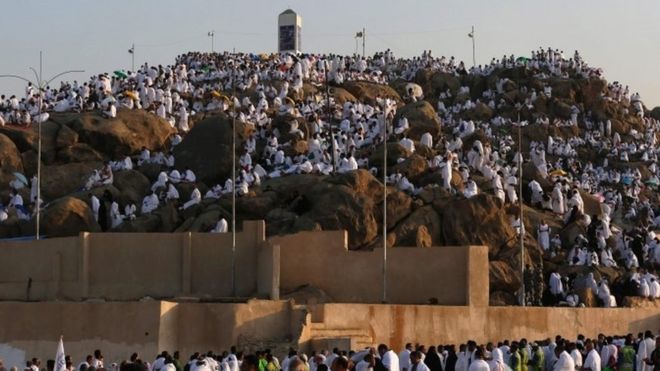
The Hajj is a pilgrimage of sorts to the Holy City of Mecca, in this journey every adult should go and has to make the trip at least once. They go the last month of the year, and in this each couple days they must complete a task to show their holiness. After they are done they may add the name Hajji to their name. This is important to do because they believe this trip will wash away their previous sins and put them in a more holy state.
Friday, January 4, 2019
5 major religions
For today's blog about Mr. Schick's Human Geography class we were given a question to answer. First off though all we did in class was talk more about the five religions and finish the power point. Now for the question at hand, in the CIA world fact book the five major religions are ranked as Christians being at 31.4% and then Muslim as 23.2%, Hindu at 15%, Buddhist at 7.1%, folk religions 5.9%, and Jewish at .2%. This is already the same as the i took during class, showing about in order how big each religion is. In the other cite Adherents it shows Christianity being the highest at 33%, Islam being at 21%, Nonreligious being at 16%, Hindu at 14%, Buddhist being at 6%, and Jewish being at .22%. These numbers differ from the ones on the Fact book showing different numbers but in the same order. The numbers are not that far off from each other either, only being off by either a couple points or a couple of decimals off. All together when you look at the broad spectrum they are showing the same information in both cites with being very close to each other.
Thursday, January 3, 2019
New Year New Studies
Today in Human Geography for the first time in the new year with Mr. Schick we began our learning on Religions, therefore major religions in the world. Our first religion was Christianity because its the largest, with around 2.2 billion. The main geographic locations for these Christians is Europe, Americas, and Southern Africa. The Denominations includes the Catholic Church, Eastern Orthodox Church, Protestants ( Lutherans, Methodists, Baptists, Anglicans, Presbyterians, Episcopalians, and many more).With this the founder was Jesus Christ and the holy book is the Bible, writing the belief that Jesus is both human and divine and the son of God who lead a virtuous life, was crucified, died, and resurrected, and ascended into heaven to rule with God the father. The clergy of this religion is the Pope as the head of the Catholic Church, and priests are the local authorities. The Next big religion is Islam which is the second biggest with 1.5 billion. The Muslims are generally in Indonesia, Middle East, and North Africa. They however only have two denominations, the shiites and the sunnis and were founded by Muhammad. They use the book the Qur'an and believe that their life should be serving and submitting themselves to Allah, through observing Islamic Law.
Subscribe to:
Comments (Atom)