Thursday, January 31, 2019
Obtain the Grain
today in Western civilization with Mr. Schick we started off class talking about bread. He bought some bread at the store that contained some of the foods we were talking about early civilizations having. he gave it to us and we obtained the grain in class. after that we continued to go over the animals used for humans to use, the ones we talked about today was Yaks, Mithuns, and bali cattle. After thousands of years all we have been able to domesticate are 14 animals. And none of those animals are from New Guinea, From the middle east cows, goats, pig, and sheep were native which also gave them advantages. The Middle East was known as the fertile crescent, due to great agriculture and animals. A place called Gwar in 9000 years ago, they were above their time, lived in one place, grew crops, raised cattle, and built structures. In Gwar they put plaster on walls, had a type of air conditioning; flowing air; knew how to control fire.

Monday, January 28, 2019
More video
In Western civilization with Mr. Schick today we continued to watch the video with Jared Diamond. We continued with the Draa civilization where in 11 thousand 5 hundred years ago people became the first to farm. Plants working under human growth, they grew what would be helpful fro them in everything from food to storage. They domesticated plants such as wheat and barley. However people in Papua New Guinea stayed behind farmers back then when people started to farm. In China people grew rice, Americans grew squash, corn, and beans, and Africans grew sorghum, millet, and beans all things that are sustainable to live on. Where as in New Guinea people could only grow sago which is a not very nutritious, low in protein food. In the middle of the island the people had been farming for over 10,000 years, but must be eaten fast or will go bad, have little protein and are hard to plant. Sometimes they eat large spiders to get protein. The conclusion he had come up with is people who had good plants could survive and thrive, geographic luck, which helped other places to move forward past hunter and gatherers. The inequalities in the world started with food, the wealth of America is based on the good crops and sustaining food. Back to 9,000 years ago, Middle East populations were growing due to farming and the new domestication of animals, could have meat and milk from Goats and other things from them and sheep. They could harvest the grains that could be eaten and let the Goats eat the other things people could not eat. People back then, before the industrial revolution used large animals for machines in everyday work such as plowing and other such things. People of New Guinea didn't have large animals to farm with only pigs, so work was done with man power.
Friday, January 25, 2019
Free day+POP Quiz
Today in Western Civilization with Mr. Schick we did some review and took a POP Quiz. We started with some review about Jared Diamond, talking about his occupation, what he agrees with and what he likes. Mr. Schick then went on to tell us we had a POP Quiz about what we have learned. The quiz was six questions and i only got five of the six questions correct. The one i got wrong was number six, i thought a sago tree couldn't grow in a swamp but a sago tree can, but cannot last in storage for a long time. After that he let us stay and do our blogs, which was nice, he gave us our one free class to do anything and it was really nice and i was able to complete it so no blogs for me tonight.
Wednesday, January 23, 2019
Guns, Germs and Steel video
Today in western civilization with Mr. Schick we watched a video. The star of the show Jared Diamond a professor at UCLA and a biologist and a specialist in human theology but his real passion is birds. The people of Papua New Guinea have been living there for over forty thousand years, longer than anyone in North America. There they are very poor, and a man named Yali asked " Why do you white men have so much cargo and why do New Guineans have so little?" and there Power was defined by race. This question made him think and go back and think about what all great civilizations have had such as advanced technology, large populations,and a well organized work force. thirteen thousand years ago everyone were hunter and gatherers like in Papua New Guinea people re still living in a hunter gatherer lives. They live by gathering Sago which is a sugar type substance with no protein. In Middle East thirteen thousand years ago grew barley and wheat, in Draa, one of the earliest civilizations had a granary or a place to store materials they didn't need or to store. At some After the drought people started to grow there own food.
Tuesday, January 22, 2019
First Day
Today was the first day of Western civilization with Mr.Schick and we went over everything on we went over the first day of Human geography. Mr. Schick went over how to make a blog and all of the rules in place that he made. He did make a couple new rules that he is now enforcing and we got seats assigned. I sit where Robert used to sit, which is the best seat in my opinion even though i wanted to sit next to Keller. Mr. Schick told us about what we will be learning which is everything i learned about in seventh grade, so i think i will be successful in this class. I did well last semester so i think i will again do well and be able to do a better job than last time in Human Geography. I look forward to the rest of the semester and hope to start learning everything as soon as possible.
Thursday, January 17, 2019
Last Human Geography class
Today was the last class with Mr.Schick in human geography. Today we took the last test in his class and we will not have him anymore this semester, however some of us will have him in the next semester. I have him next semester for Western civilization, many will move on to another class with another teacher. I will say though he did ask us to put what we thought about his class this semester, so i will now write my review if you want to call it that. I though this class was a good class and us as students learned many things in a short time period for a class. Notes were taken everyday to insure we could study and always were paying attention which helped the class with learning. I would also say we had many very well spoken conversations which i personally enjoyed. All together this class was well rounded and i liked how it was done, but there are also some things i didn't care for. Blogging ever night of the class wasn't my favorite however it did help me to better now the information. All together i liked the class and learned many things which i can use and bring up in any day conversation. I will say Thank you Mr. Schick for this and i will see you next semester in Western Civilization.
Wednesday, January 16, 2019
Study time
Today in human geography with Mr. Schick we reviewed for the test that we have on religions tomorrow. In class we went over 23 out of the 25 of the test questions and me and Mr. Schick continued to ask philosophical questions to each other looking for an answer. Im going to let this go now so i can go study.
Tuesday, January 15, 2019
Five Religions Paragraph
The biggest of the five religions that we have been studying is Christianity, with a number of adherents being somewhere around 2.2 billion. These 2.2 billion people are called Christians and majority are located in Europe, Americas, and Southern Africa. The founder of this religion is Jesus Christ and the holy book is is called the Bible. They believe that Jesus is both man and divine-Son of God, and lead a virtuous life before he was crucified, died, buried, and resurrected;he ascended into heaven where he reigns with God the father. In this religion the Pope is the head of the church being the bishop of the Roman Catholic Church and priests are his local authorities and leaders of the church.
The second biggest religion is the religion of Islam, with a estimated 1.5 billion adherents called Muslims. They are mainly located in Indonesia, Middle East, and North Africa. Unlike Christianity they have only two denominations the Shiites and the Sunnis. There founder was Muhammad and the holy book is called the Qur'an. They believe the Abrahamic five pillars (testimony, prayer, alms giving, fasting, pilgrimage) Muslims see their life purpose as serving and submitting to Allah and observing Islamic law.
The third largest religion in the world is Hinduism with 1.1 billion adherents called Hindus. They are mainly located in India and Nepal. Their holy book the vedas is eternal truths revealed to ancient sages; composed in verse form(to be sung and easily remembered). They unlike the other two have no distinct founder, and its more a philosophical view than a set of strict beliefs.
The next religion is Buddhism with anywhere from 500 million to 1.5 billion adherents called Buddhists. The are located in Southeast Asia, China, Nepal, and Japan( with around 1.2 million in the United States). Their founder was siddhartha Guatama and from this there are only three denominations the tibetan, Zen, Theravada, and Amidist. They believe in the four noble truths and following the eightfold path.
The next religion is not the fifth biggest but it is an important religion, the religion of Judaism. Called Jews, they mainly live around Israel and the United States. Their founder was Abraham, and there holy book is the Torah, or the five books from the old testament. They believe that God is one, and concerned with the actions of human kind, they also believe in the ten commandments and the 13 principals of faith.
The second biggest religion is the religion of Islam, with a estimated 1.5 billion adherents called Muslims. They are mainly located in Indonesia, Middle East, and North Africa. Unlike Christianity they have only two denominations the Shiites and the Sunnis. There founder was Muhammad and the holy book is called the Qur'an. They believe the Abrahamic five pillars (testimony, prayer, alms giving, fasting, pilgrimage) Muslims see their life purpose as serving and submitting to Allah and observing Islamic law.
The third largest religion in the world is Hinduism with 1.1 billion adherents called Hindus. They are mainly located in India and Nepal. Their holy book the vedas is eternal truths revealed to ancient sages; composed in verse form(to be sung and easily remembered). They unlike the other two have no distinct founder, and its more a philosophical view than a set of strict beliefs.
The next religion is Buddhism with anywhere from 500 million to 1.5 billion adherents called Buddhists. The are located in Southeast Asia, China, Nepal, and Japan( with around 1.2 million in the United States). Their founder was siddhartha Guatama and from this there are only three denominations the tibetan, Zen, Theravada, and Amidist. They believe in the four noble truths and following the eightfold path.
The next religion is not the fifth biggest but it is an important religion, the religion of Judaism. Called Jews, they mainly live around Israel and the United States. Their founder was Abraham, and there holy book is the Torah, or the five books from the old testament. They believe that God is one, and concerned with the actions of human kind, they also believe in the ten commandments and the 13 principals of faith.
Friday, January 11, 2019
Bible vs. Quran
Today in human Geography with Mr. Schick we had an activity that included choosing whether a quote was from the bible or the Quran. In class we finally after about twenty minutes got everything right but one question earning us an A and ending the activity, during the activity we argued a lot but got it done well. The rest of class we were to write our blogs so that's what i'm doing now, i will now leave you with a picture of a squirrel with a horses head.

Thursday, January 10, 2019
More underlining
Today in human geography with Mr. Schick we continued to underline different things we need to know for the test in the packet we were given. We only had about two more pages to go so we finished the class very early and for that reason we are all doing our blogs for tonight in class. This especially tonight helps me because i have workouts tonight and this is one extra thing i can get done in class. However i'm not sure what to "blog" about, i could write about the class or the information we underlined but again it was all in the power point. I guess ill talk about how i feel going into the test, i feel really good about this unit. Its not very hard and its only five religions, not a lot of information to remember and its very easy information at that so i feel like i should get a 100 on this test.
Wednesday, January 9, 2019
The Talk
Today in Human Geography with Mr.Schick we talked the hole class based on a packet he gave us a couple days ago. Everything we talked about was in the power point we went over on religions, he did this so we had another reference to study but the thing is that the power point was made based on the packet from the book so all the important things we need to know are in the power point. So in that retrospect it made class very boring, for we had learned everything and it was just review, but i appreciated the class a lot. For i have been having a long day and it was nice to be able to enjoy a slowed down laid back class for review. I payed attention in the class because we would underline the important info.
Monday, January 7, 2019
Religion Questions
Today in Mr. Schick's human Geography class we were told to answer a set of questions. The first question i am answering is what are the four basic Vedic texts and give a description of each and how many hymns are in each one. The first of the vedic texts is the Rig-Veda which is a text for knowledge of the hymns and praising, in this text their is 1,017 hymns in this text. The next of the four is the Sama-Veda which is a text for knowledge of the melodies containing 1,549 hymns. The third of these texts is the Yajur- Veda which is a text for knowledge of the sacrificial formulas containing 1,024 hymns. The last of the vedic is the Atharva-Veda which is used for knowledge of the magic formula, which contains 730 hymns. The second question i will be answering is describing the practice of indulgences and why Martin Luther objected to it. From what i found the practice of indulgences is the process of reducing the punishment for someones sins. I would say that Martin Luther objected to this because when someone sins, its a punishment that they have to undertake because of the choice to do wrong knowing that that's not what God wanted. I had gotten my information from,
https://en.wikipedia.org/wiki/Indulgence
The last question i will answer is to describe the Hajj, and include a photo in my blog about the Hajj. I will start with a photo and then describe the journey. 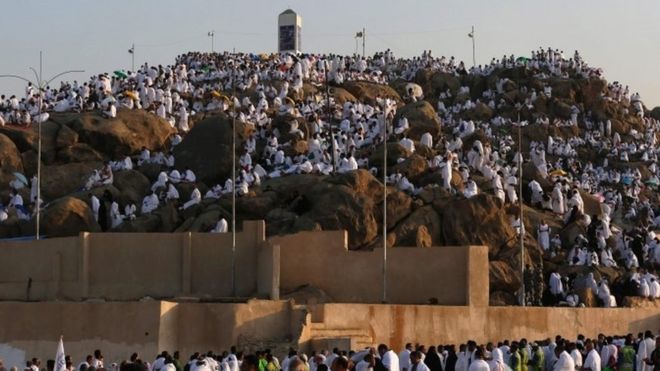
The Hajj is a pilgrimage of sorts to the Holy City of Mecca, in this journey every adult should go and has to make the trip at least once. They go the last month of the year, and in this each couple days they must complete a task to show their holiness. After they are done they may add the name Hajji to their name. This is important to do because they believe this trip will wash away their previous sins and put them in a more holy state.
Friday, January 4, 2019
5 major religions
For today's blog about Mr. Schick's Human Geography class we were given a question to answer. First off though all we did in class was talk more about the five religions and finish the power point. Now for the question at hand, in the CIA world fact book the five major religions are ranked as Christians being at 31.4% and then Muslim as 23.2%, Hindu at 15%, Buddhist at 7.1%, folk religions 5.9%, and Jewish at .2%. This is already the same as the i took during class, showing about in order how big each religion is. In the other cite Adherents it shows Christianity being the highest at 33%, Islam being at 21%, Nonreligious being at 16%, Hindu at 14%, Buddhist being at 6%, and Jewish being at .22%. These numbers differ from the ones on the Fact book showing different numbers but in the same order. The numbers are not that far off from each other either, only being off by either a couple points or a couple of decimals off. All together when you look at the broad spectrum they are showing the same information in both cites with being very close to each other.
Thursday, January 3, 2019
New Year New Studies
Today in Human Geography for the first time in the new year with Mr. Schick we began our learning on Religions, therefore major religions in the world. Our first religion was Christianity because its the largest, with around 2.2 billion. The main geographic locations for these Christians is Europe, Americas, and Southern Africa. The Denominations includes the Catholic Church, Eastern Orthodox Church, Protestants ( Lutherans, Methodists, Baptists, Anglicans, Presbyterians, Episcopalians, and many more).With this the founder was Jesus Christ and the holy book is the Bible, writing the belief that Jesus is both human and divine and the son of God who lead a virtuous life, was crucified, died, and resurrected, and ascended into heaven to rule with God the father. The clergy of this religion is the Pope as the head of the Catholic Church, and priests are the local authorities. The Next big religion is Islam which is the second biggest with 1.5 billion. The Muslims are generally in Indonesia, Middle East, and North Africa. They however only have two denominations, the shiites and the sunnis and were founded by Muhammad. They use the book the Qur'an and believe that their life should be serving and submitting themselves to Allah, through observing Islamic Law.
Subscribe to:
Comments (Atom)